


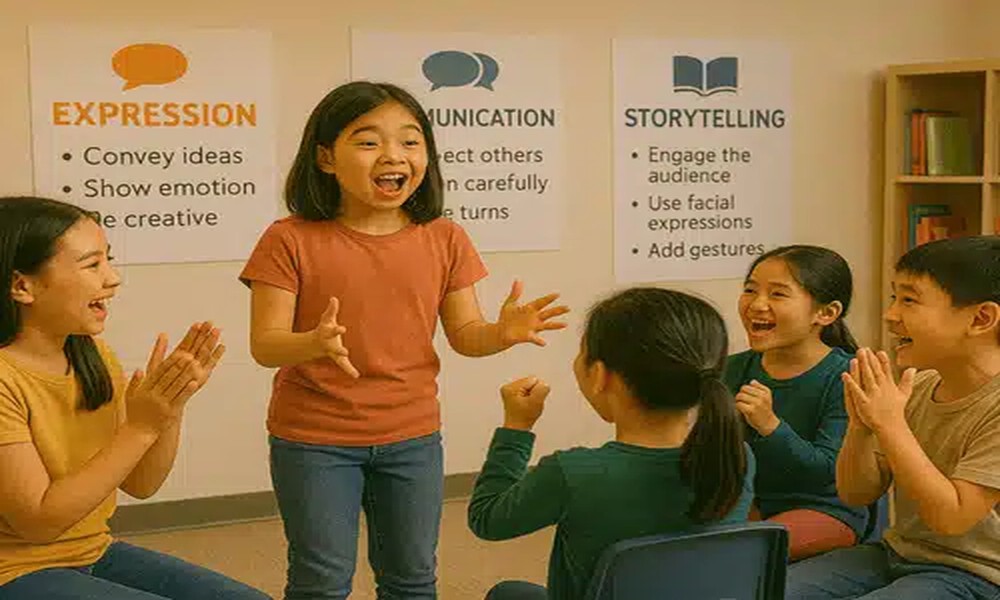
Teaching children to wait their turn can feel like an uphill battle. Yet this skill forms the foundation of good communication and social success. Turn-taking helps children listen, respond, and join group activities without talking over others. Drama and public speaking classes offer a natural way to build these abilities while keeping children engaged and active.
Why Turn-Taking Matters for Young Learners
Children who struggle with turn-taking often find group activities difficult. They may interrupt others or dominate conversations. These patterns can affect friendships and classroom performance.
Speech and drama activities create clear structures for taking turns. Each child gets a moment in the spotlight. They also learn to support their peers from the sidelines. This balance teaches patience and respect in ways that feel natural rather than forced.
How Drama Activities Build Social Skills
Group drama work relies on cooperation. One child cannot perform a scene alone. They need scene partners who listen and respond. This creates immediate consequences for poor turn-taking behaviour.
When a child interrupts during a partner’s line, the scene breaks down. They see firsthand how their actions affect the group. This real-time feedback often makes the lesson easier to understand than a general reminder about manners.
Drama and public speaking classes also teach children to read social cues. They learn when to speak and when to stay quiet. They discover how to share space with others. These lessons transfer directly to everyday situations at school and home.
Practical Group Activities That Work
Circle games serve as excellent warm-ups. Each child adds one word to build a story. They must wait for their turn and listen to what others say. This simple exercise demands focus and restraint.
Scene work takes turn-taking further. Two or three children create a short dialogue together. Each must deliver their lines at the right moment. They cannot rush ahead or steal focus from their partners.
Improvisation games raise the difficulty level. Children respond to unexpected prompts without a script. They must think quickly while still respecting the contributions of others. This builds confidence alongside social awareness.
The Role of the Teacher
A skilled instructor creates a safe space for practice. They set clear expectations about behaviour. Children learn that everyone deserves time to speak and be heard.
Teachers can use physical markers to help younger children. A special hat or prop shows whose turn it is. This visual cue makes the concept concrete and easy to follow.
Positive reinforcement matters too. When children wait patiently or support their peers, they receive praise. This encourages them to repeat good behaviour in future sessions.
Benefits Beyond the Classroom
The skills gained through drama and public speaking classes extend far beyond the studio. Children who learn proper turn-taking become better listeners. They develop empathy as they imagine themselves in different roles.
These young people often show improvement in academic settings. They participate more effectively in class discussions. They work better in group projects. Teachers notice the difference in their behaviour and engagement.
Family life may improve as well. Children who attend speech and drama sessions often communicate more clearly at home. They listen when siblings speak. They may wait a little longer before interrupting adult conversations, or become more willing to explain their thoughts. Parents can see real change in daily interactions,which usually take time and depend on regular practice.
Starting the Journey
Most programmes welcome complete beginners. Children need no previous experience with performance. The focus is on building skills gradually through play and practice.
Sessions typically run weekly. This regular schedule helps children develop good habits over time. They cannot learn turn-taking in a single afternoon. It requires repeated practice in a supportive environment.
Drama and public speaking classes vary in structure and approach. Some focus heavily on performance. Others prioritise social development. Parents should look for programmes that match their child’s needs and personality.
Making It Work Long-Term
Consistency matters when teaching social skills. Children benefit from attending sessions throughout the school year. This allows new behaviours to become automatic rather than forced.
Parents can support the process at home. They might play similar turn-taking games during family time. This reinforces the lessons learned in class and speeds progress.
The investment in drama and public speaking classes pays dividends for years. Children carry these communication skills into adolescence and adulthood. They become people who know how to listen, share space, and work well with others.